Global Investment Trends Shaping India’s Next Decade of Growth
As we stand at the intersection of evolving global dynamics and domestic transformation, India’s role in the world investment landscape is gaining remarkable traction. With a robust policy framework, investor-friendly reforms, and an ever-growing digital economy, the country is positioning itself as a preferred destination for foreign direct investment (FDI) in the decade ahead.
In this blog, we bring to light the critical global investment trends that India must watch closely to stay aligned with the next phase of economic expansion. From the redirection of cross-border capital to the evolution of sectoral focus, we’ll explore where intelligent capital is moving—and how India can anticipate and position itself to remain ahead of the curve.

FDI: India’s Strong Foundation for Global Capital Inflow
It is evident that India has already made significant strides in attracting foreign capital. The government's “Make in India†initiative has played a central role in transforming the investment climate by streamlining procedures and improving sectoral access. Backed by liberal FDI reforms—particularly in retail, defence, insurance, and single-brand retail trading , India has become a hotspot for international investment.
The scale of India’s FDI success is evident. From April 2000 to March 2025, the country received a cumulative Rs. 47,68,930 crore (US$ 728.88 billion) in FDI inflows from over 170 countries, spanning 33 States and UTs and 63 sectors. The services, computer software and hardware, and trading segments have emerged as the top recipients, signaling both economic resilience and digital adoption.
Global Executive Outlook: Optimism with Caution
The recently released third annual investment trends report, based on a survey of 2,500 senior executives across 17 countries and nine industries, offers nuanced insights. Despite ongoing geopolitical and macroeconomic uncertainty, 62% of large organizations expressed optimism about their 2025 growth prospects, a notable rise from 56% in 2024.
However, there’s a critical nuance. While firms are upbeat about their own trajectory, their views on the broader global economy are more cautious. This divergence underscores the growing importance of localized resilience, strategic agility, and long-term investment thinking.
“Even with global headwinds, organizations are navigating uncertainty with confidence and doubling down on future-ready investments.â€
Cost Efficiency Meets Strategic Investment
For many global firms,cost containment has overtaken revenue growth as a strategic goal in 2025— 56% of companies are prioritizing cost efficiency. But that doesn’t imply a cut in capital deployment. 50% of surveyed organizations still plan to increase overall investment, with the aim to drive long-term competitiveness.
The clear takeaway here is that capital will flow not just where growth is visible, but where efficiency meets innovation. India’s emerging tech hubs, skill-ready workforce, and policy stability can play a big role in attracting these investors seeking returns with efficiency.
What India Must Watch: Top Investment Priorities
As global capital allocators reorient their strategies, three core themes have emerged as dominant investment priorities for 2025 and beyond:
- Serving as the primary point of contact for shareholders and responding to investor queries.
- Coordinating Annual General Meetings (AGMs) and Extraordinary General Meetings (EGMs).
- Preparing shareholder communications in a way that is transparent yet strategic.
India's next decade of growth will be fueled by global capital prioritizing Tech-Led Manufacturing, Green Finance, and Supply Chain transformation.
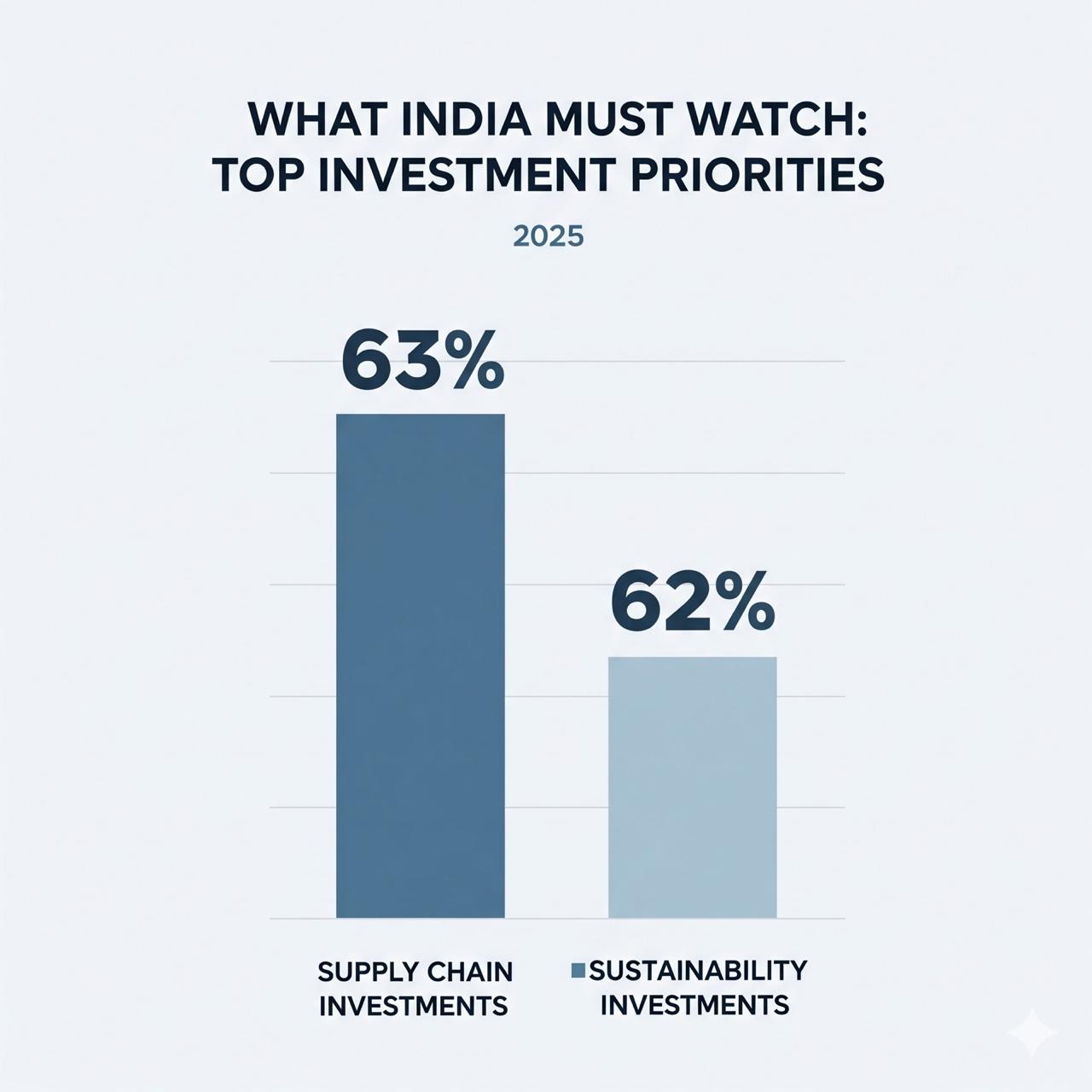
The most striking trend is the rise in supply chain investment, with 63% of leaders planning to invest more in 2025,up 15 percentage points from 2024. In parallel, 62% aim to boost sustainability investments, highlighting the accelerating convergence of ESG goals and financial outcomes.
India's Next Decade of Investment Trend: Where Should We Focus?
India’s growing infrastructure push, logistics sector reform, and strong ESG narrative can align seamlessly with these shifting global priorities. Smart partnerships, green manufacturing zones, and digitized supply chains could make India a natural magnet for this strategic capital.
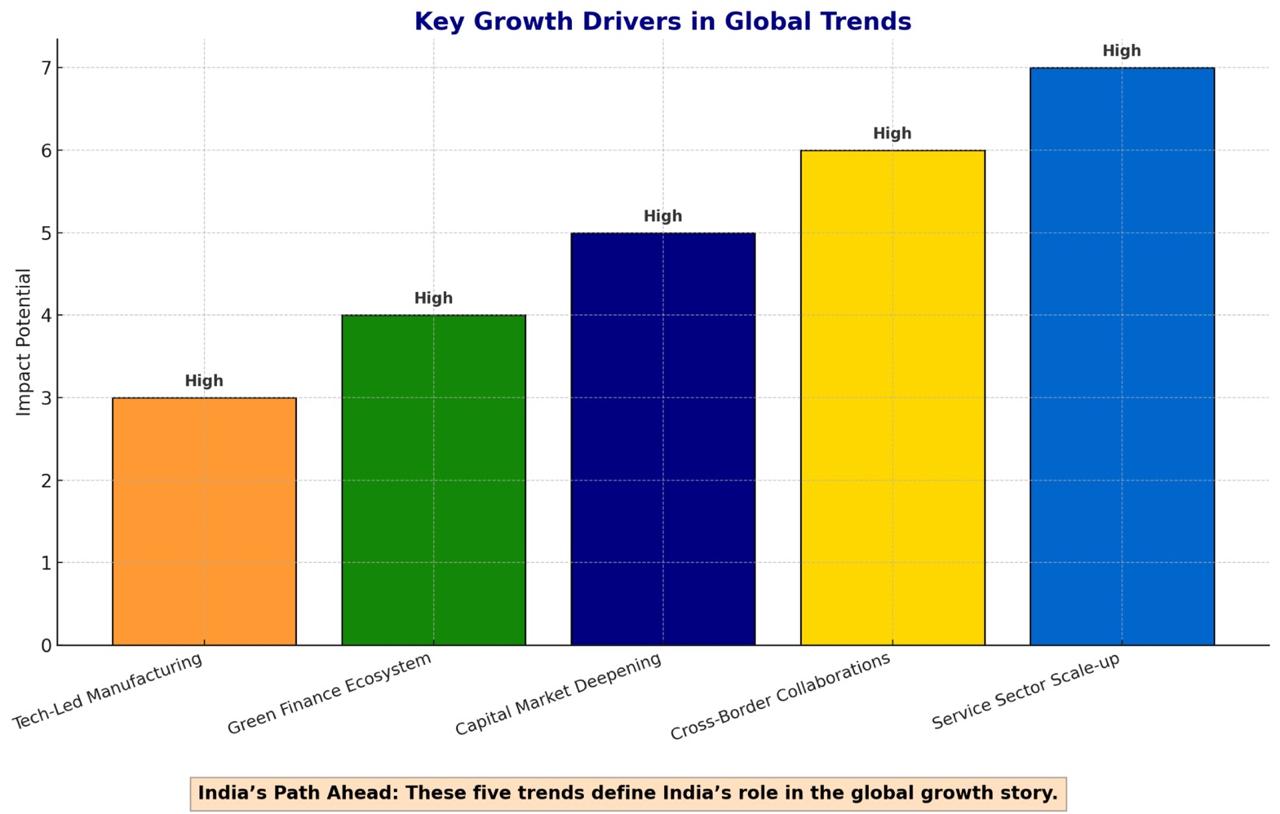
For India to truly leverage these global currents, we must focus on five critical areas:
- Tech-Led Manufacturing – The global shift toward resilient and diversified supply chains has driven a renewed focus on high-tech manufacturing. India is amplifying initiatives like the Production Linked Incentive (PLI) scheme to create competitive export clusters. The focus is on high-value products, from semiconductors and consumer electronics to military transport aircraft, positioning India as a global manufacturing hub.
- Green Finance Ecosystem – With climate action becoming a top priority for investors worldwide, the demand for green finance has surged. India is enhancing regulatory clarity and incentives for ESG-linked (Environmental, Social, and Governance) investments to attract this capital. By developing a transparent and robust green finance ecosystem, India aims to channel global capital into its renewable energy and sustainable infrastructure projects.
- Capital Market Deepening –Global investors seek markets that are not only high-growth but also transparent and well-governed. India is building investor confidence by strengthening its capital markets. The rising influence of domestic institutional and retail investors is making India's markets more resilient to foreign capital outflows, a crucial sign of a maturing and stable financial system.
- Cross-Border Collaborations – In an interconnected world, strategic partnerships are key to unlocking sectoral growth. India is actively pursuing bilateral and multilateral investment frameworks to attract capital and technology. Recent trade agreements with countries like the UAE and Australia, as well as new strategic roadmaps with nations like Singapore, are opening up new avenues for collaboration in sectors such as semiconductors, defense, and green shipping.
- Service Sector Scale-up – India has long been a services powerhouse, and the global trend toward digitalization is amplifying this strength. The country is continuing to build capacity in key service areas like IT, fintech, and professional services to capture a larger share of foreign direct investment (FDI).
Having spent over a decade in finance and wealth management, we can conclude that “India’s true edge lies in its demographic dividend, robust digital ecosystem, and a reform-driven government. However, in an increasingly competitive global landscape for capital, it’s not just intent but execution excellence that will set us apartâ€.
Final Thoughts
India stands at a pivotal point in global investment history. With a supportive policy framework, deep investor trust, and emerging sectoral strengths, the country can become a global leader in capital absorption and innovation.
As Jeremy Jurgens of the World Economic Forum remarked, "Despite global uncertainties, the willingness of companies to continue investing in innovation and resilience shows the kind of future-ready thinking the world needs."
For India, the next decade won’t just be about capital inflow—it will be about strategic direction, sectoral preparation, and policy synchronization with global investment priorities.
- With insights from global industry surveys and macroeconomic data, this blog is presented by our growth partner India & International, Mr.Devesh Chawla, Gretex Share Broking Limited, with over 16 years of experience in equity, funding, and global markets.Disclaimer: The information provided herein is for educational purposes only and should not be construed as investment advice. Please consult your financial advisor before making any investment decisions.